
Broken Torsion Springs
Broken torsion springs lead the list. Cold-moderate winters put more stress-cycle fatigue on spring steel, so more of them fail per season here than in a warmer region.
Local garage door service · Maplewood, MN
Maplewood garage door repair and installation for 1950-2002 homes, with spring, cable, roller, and opener service built for cold Minnesota winters.

Garage door services
From spring repair and cable repair to opener installation, panel replacement, roller replacement, new door installation, and general garage door service, the lineup is built around Maplewood's 1950-2002 housing stock and its 1960s-70s torsion hardware.


Common Maplewood garage door problems
Broken torsion springs lead the list, and it's not close - cold-moderate winters put more stress-cycle fatigue on spring steel than a warmer climate would, so we replace more of them per season here than techs in milder regions do. Second most common is opener failures, usually a dead circuit board or a drifted limit setting rather than the motor itself; third is track and roller wear on the older steel-roller setups still common on houses from the main 1960s-70s building era. Cable fraying shows up seasonally too, usually noticed when a door starts sitting unevenly on one side, and weatherstripping replacement is a steady smaller job since cold-moderate winters are hard on the bottom seal over several years. What we don't see much of is full structural door replacement from storm damage, since nothing in this area's weather profile runs that hard.
Broken torsion springs lead the list. Cold-moderate winters put more stress-cycle fatigue on spring steel, so more of them fail per season here than in a warmer region.
Opener problems are usually a dead circuit board or a drifted limit setting rather than the motor itself.
Older steel-roller setups common on 1960s-70s houses wear and run rough; swapping to nylon rollers runs quieter and lasts longer.
Cable fraying shows up seasonally, usually noticed when a door starts sitting unevenly on one side.
Bottom-seal and weatherstripping replacement is a steady smaller job, since cold-moderate winters are hard on the seal over several years.
Clear repair guidance
What a job runs depends on what's actually wrong, not on a flat rate we quote over the phone. A broken torsion spring on a standard door is a different job than one on a door built before double torsion springs were standard - the older single-spring setups common in homes from the 1950s through the 1970s take different hardware and sometimes different labor.
Opener boards, sensor pairs, and tracks all price out on their own. Your household income doesn't change what a cable costs, but your house's age does: homes from Maplewood's main building era often still run original track and drum hardware that newer parts don't bolt onto cleanly, which adds time.
Cold-climate wear matters too - steel spring coils fatigue faster through repeated freeze-thaw cycles than they would somewhere milder. We'll tell you the number before we start, not after the door's apart on your driveway.
One honest limit: if your door is old enough that parts are genuinely scarce, replacement sometimes costs less over time than chasing discontinued hardware, and we'll say so even when a repair is technically possible.
Local housing matters

Housing across the area runs from 1950 up through 2002, with the median build year landing around 1975 - which puts most of what we work on squarely in that 1960s-to-70s band, spread across 41 named neighborhoods and areas rather than one or two subdivisions.
That matters for garage doors because hardware standards shifted a lot over that stretch. A house from the early part of that range is more likely to have a single-spring torsion setup or an older extension-spring system bolted to the header, while something built closer to 2000 usually has the double-torsion, steel-roller setup that's standard now.
We see both, often on the same block, because infill and later additions filled in lots next to the original postwar builds. If you don't know which you have, the giveaway is usually the spring: one thick coil centered over the door versus two coils, one on each side of the shaft.
Either way, the opener itself has usually been swapped at least once since the house was built - openers wear out faster than the door, especially the circuit boards, so an original-to-the-house opener on a 1960s build is unusual, not expected.
Cold-weather garage door wear
Maplewood sits in a cold-moderate winter climate, so repeated freeze-thaw cycles tend to expose existing spring fatigue, roller and track resistance, weather-seal deterioration, and opener load rather than temperature alone causing failure.
Steel spring coils fatigue faster through repeated freeze-thaw cycles than they would somewhere milder, so springs near the end of their cycle life tend to let go over a Maplewood winter.
Worn steel rollers or marginal track alignment become more noticeable when an older door is already moving with added resistance in the cold.
Cold-moderate winters are hard on the bottom seal over several years, and older weatherstripping hardens, cracks, or loses contact against the floor.
An opener works harder when spring, roller, track, or balance problems are already making the door difficult to move.
What to expect
You call and tell us what the door is doing; on site the tech checks the whole system before touching anything, quotes the repair before starting it, and sets a clear parts expectation when an older door needs hardware ordered.
You tell us what the door is doing or not doing, and we give you a window for the same day or the next, depending on the backlog.
On site, the tech checks the spring, cables, rollers, track alignment, and the opener's force settings before touching anything - a door that won't close is sometimes a broken spring and sometimes a misaligned safety sensor, and those jobs cost nothing alike.
We quote the repair before we start it, not after. If it's a part we carry - torsion springs in common sizes, rollers, standard openers - it gets done that visit.
We don't push replacement when a repair holds up fine, and we don't patch a door that's at the end of its service life just to close a call. That judgment is made with you, before any work starts.
Older Doors May Need Ordered Parts
For a part off an older door - one of the original one-piece or early sectional units still hanging on some 1960s-era houses here - we may need to order it, and we'll tell you that up front.
Repair or replace?
A broken spring, cable, roller, or opener component doesn't automatically mean the whole garage door needs replacement. Replacement becomes the better value when parts are genuinely scarce or several systems are failing at once.
A targeted repair makes sense when the panels, tracks, opener, springs, and surrounding hardware remain serviceable and one component is the actual failure.
An older garage door can remain worth keeping when its structure is sound and the immediate failure is isolated.
If a door is old enough that parts are genuinely scarce, replacement sometimes costs less over time than chasing discontinued hardware.
When a repair and a replacement cost close to the same because several systems are failing together, we say so plainly instead of running up a repair bill.
1950s–2000s garage door systems
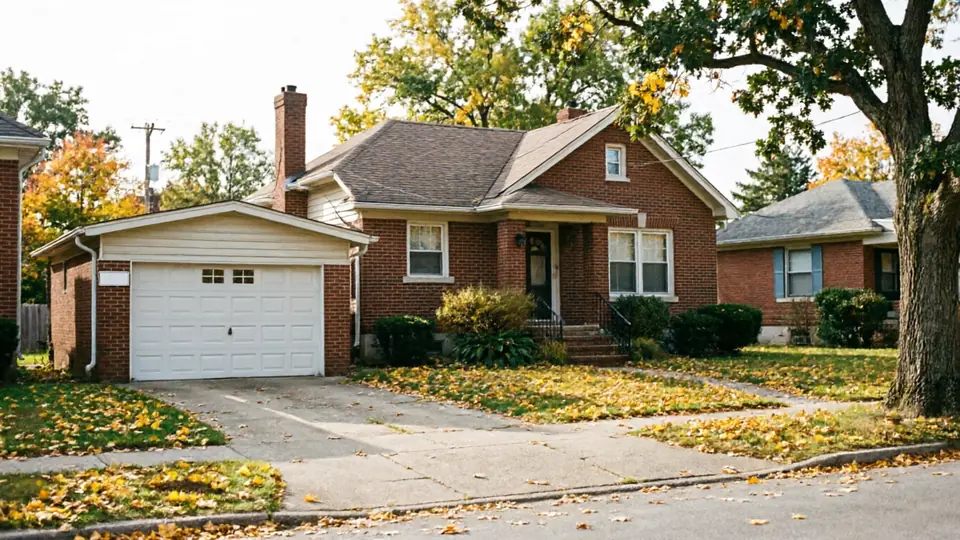
Maplewood's broad build range means garages can combine single-spring torsion setups, older extension-spring systems, newer double-torsion steel-roller doors, and openers that have been swapped at least once since the house was built.
Houses from the early part of the range often have a single thick coil centered over the door, using hardware and sometimes labor different from modern setups.
Some earlier doors run an older extension-spring system bolted to the header rather than a torsion shaft.
Homes built closer to 2000 usually have the double-torsion, steel-roller setup that's standard now and easier to source parts for fast.
The opener has usually been swapped at least once; openers - especially circuit boards - wear out faster than the door itself.
Built around Maplewood garage doors
With single-spring, extension-spring, and double-torsion doors often on the same block and openers swapped at different times, the visible door, spring system, opener, and tracks may all be from different eras - so we inspect before matching parts.
Spring type and size, door weight, cable condition, roller type, track alignment, and opener hardware are checked directly before anything is ordered.
A newer opener may be running on an older door and original track and drum hardware that newer parts don't bolt onto cleanly.
If the panels, tracks, and supporting hardware remain sound and one component is the actual failure, complete replacement is not automatically necessary.
When hardware is old enough to be scarce, we say so up front and lay out the real repair-versus-replace comparison before you decide.
Service areas
We're based in Maplewood and most of our calls stay close: North St. Paul is about two miles off, Little Canada and Vadnais Heights around three, Oakdale and Mahtomedi about four. Farther out we still run jobs in Roseville, Dellwood, and Lake Elmo at roughly six miles, North Oaks and Falcon Heights near seven, and Grant close behind. Arden Hills, West St. Paul, St. Anthony, South St. Paul, and New Brighton sit in the eight-to-nine-mile range.
We go as far as Lino Lakes, Newport, Centerville, Circle Pines, and Mounds View around ten miles out, with occasional calls to Columbia Heights, Mendota Heights, Fridley, Inver Grove Heights, and Afton toward the edge of that range. The Greater East Side, just a few miles south, gets regular traffic too. If you're closer to the center of that list, same-day scheduling is easier to land; the farther out we drive, the more we batch the route with a nearby call, so flexibility on timing helps.
From our Maplewood, MN base we run trucks across the surrounding towns rather than keeping a storefront in each one. Supported suburb pages cover Golden Valley, Inver Grove Heights, Lake Elmo, Lino Lakes, Oakdale, Richfield, and Roseville - pick yours to see the local detail.
Questions
Same day or next day is typical, depending on how the schedule's running that day. A snapped torsion spring means the door won't open safely, so those calls get priority over cosmetic or non-urgent jobs. We'll give you a window when you call, not a vague callback promise.
Yes. A lot of houses in this area date from that stretch, and we see single-spring torsion setups and older extension-spring doors regularly. Parts for the oldest hardware sometimes take longer to source than parts for a 1990s-era door, and we'll tell you that up front if it applies to your job.
Sometimes, yes. If your door's hardware is old enough that parts are scarce, or if several systems are failing at once, a full replacement can end up costing less over time than a string of individual repairs. We'll walk you through the real comparison before you decide, not just push one option.
Our core area runs out to roughly 10-13 miles, covering towns from North St. Paul and Little Canada a few miles out to Inver Grove Heights and Afton toward the edge. The closer you are, the easier it is to land same-day scheduling.
Ready when you are
Tell us what the door is doing and we'll help you figure out the fix across Maplewood.